If you have a pet, a phone, and a little consistency, you can become a pet influencer in 2026 — and yes, you can earn real money doing it. But most guides skip the unglamorous parts. This one won't.
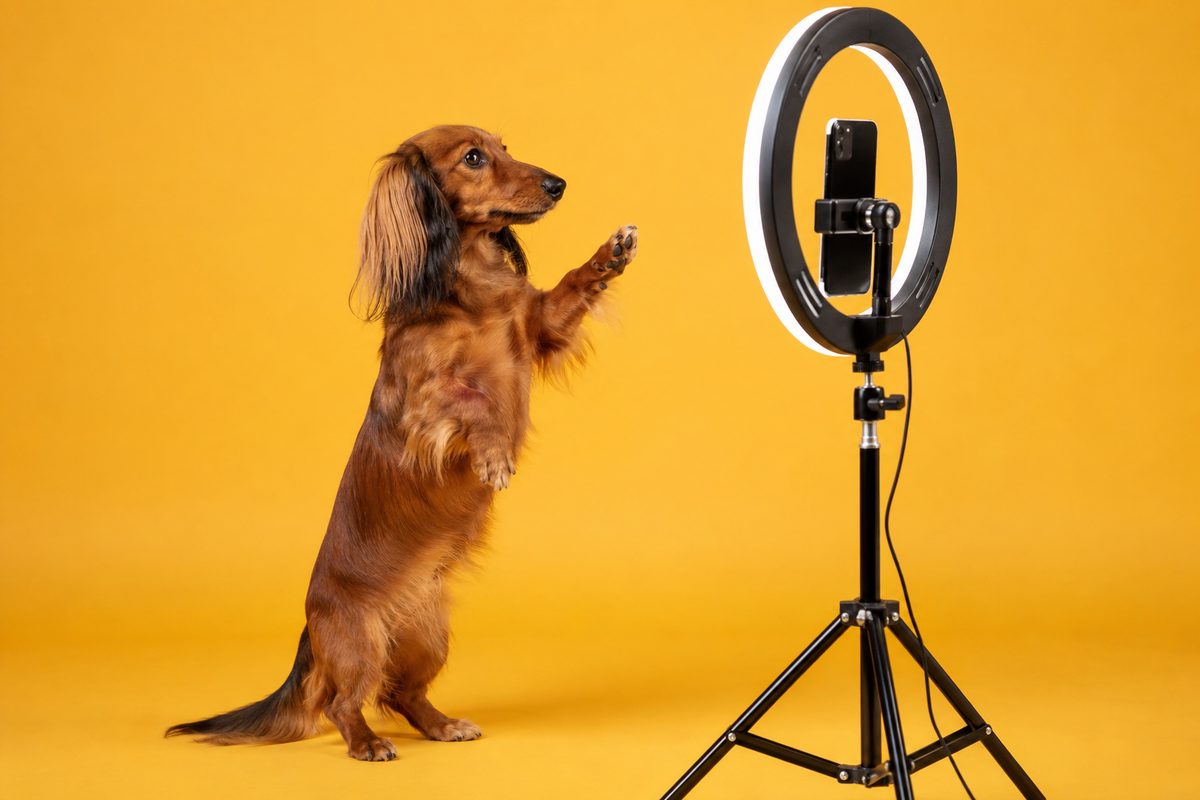
We're Nicole & Nora, and we grew a pet account from zero and landed our first paid work under 5,000 followers. Below is the exact path we'd take if we were starting over today: how to pick a niche, set up your account, make content people actually stop scrolling for, grow a real audience, and turn it into income. No get-rich-quick promises — just the honest playbook.
What's in this guide
Can you actually make money as a pet influencer? Step 1: Pick a niche and an angle Step 2: Set up your account the right way Step 3: Make content people stop for Step 4: Grow your first 1,000 followers Step 5: How pet influencers actually make money Step 6: Land your first brand deal How long does it really take? Your complete pet-creator roadmap Frequently asked questionsCan you actually make money as a pet influencer?
Short answer: yes, but it's a real business, not a lottery ticket. Pet accounts have a genuine advantage — they tend to earn two to three times higher engagement than human lifestyle creators at the same follower count, which is exactly what brands pay for. That's why a dog or cat account with 8,000 engaged followers can out-earn a lifestyle account with 30,000.
Here's a realistic picture of what pet creators earn in 2026, by stage rather than by follower count:
- Just starting: little to nothing at first, then a few hundred dollars as you land your first gifted and paid collaborations.
- Growing: a few hundred to a few thousand dollars a month across brand deals, UGC, and affiliate income.
- Established: five figures a month is achievable for creators who treat it like a business and diversify their income.
The catch — and we mean this — results depend entirely on your niche, effort, and consistency, and for some people the answer is close to zero. Viral views alone don't pay; only monetized platforms and real brand relationships do. Keep that expectation honest and the rest of this guide will make sense. Prefer lessons over reading? The same system is a free-to-start course in the Astra Trainer app.
Step 1: Pick a niche and an angle
"Cute pet" is not a niche — it's the whole platform. To stand out, you need an angle: the specific reason someone follows your pet instead of the millions of others. It usually comes from one of three places:
- Breed or type: mini dachshunds, senior rescues, reactive dogs, bonded cats, exotics. A clear identity makes you findable and relatable.
- Format: a recurring bit — daily "what my dog ate," training transformations, funny voiceovers, aesthetic day-in-the-life.
- Mission: rescue advocacy, anxious-dog confidence, budget pet parenting. A mission gives people a reason to stay.
This works for any pet — dogs, cats, exotics, rescues. Pick something you can happily post about a hundred times, because you will.
Step 2: Set up your account the right way
Brand new? Start with our beginner guide to starting a dog Instagram account.
Before you chase followers, make your account easy to find and easy to trust. A few basics move the needle more than people expect:
- A searchable name and handle. Put the pet's name and niche where people (and search) can see it — e.g. "Nicole & Nora — Mini Dachshunds."
- A bio that says who it's for. One line on what you post, one line of personality, and a single clear link.
- One link that does the work. Point it to your most valuable thing — a freebie, a newsletter, or a product.
- Consistency across platforms. Same handle on Instagram, TikTok, and YouTube so a fan on one app can find you on the others.
Step 3: Make content people stop for
Growth is mostly a content problem, not a follower problem. The accounts that grow in 2026 nail three things: a strong first second (the hook), a reason to keep watching (a mini story or payoff), and a reason to follow (they'll get more like this). Practical rules we live by:
- Post short-form video first. Reels and TikToks are where new audiences find you; photos are for the fans you already have.
- Hook in the first frame. Movement, a question, or an unexpected moment beats a slow intro every time.
- Batch your content. Film several clips in one session so a busy week doesn't break your consistency.
- Use AI to move faster, not to sound fake. Caption drafts, hook ideas, and a content calendar are fair game; your pet's real personality is the point.
Step 4: Grow your first 1,000 followers
The first thousand is the hardest and the most important — it's proof of concept. Focus on being repeatable and findable rather than viral:
- Commit to a posting rhythm you can actually keep (even 3–4 times a week) for 60–90 days before judging results.
- Engage in your niche. Comment genuinely on similar accounts; that's where your future followers already are.
- Double down on what works. When one format overperforms, make five more like it instead of reinventing.
- Don't wait for a big number to monetize. Nano creators (1K–10K) already land gifted products and paid UGC.
Step 5: How pet influencers actually make money
The creators who earn well don't rely on one income stream — they stack several. Here are the main ones, roughly in the order most people unlock them:
- Gifted collaborations & UGC: free products, then paid content you create for brands to use in their own ads. UGC pays even at small follower counts.
- Sponsored posts & brand deals: the classic — a brand pays you to feature them (rates below).
- Affiliate & TikTok Shop: commission on products you recommend. Standard affiliate rates are modest, but TikTok Shop has become a real earner for pet creators — some report four figures a month.
- Platform payouts: YouTube ad revenue is one of the steadiest; TikTok's creator programs are less predictable.
- Your own products: digital guides, presets, merch, or memberships — the highest-margin income, and fully yours. Sell merch and physical goods from your own Shopify store. (affiliate — we may earn a commission at no cost to you)
2026 pet influencer rate benchmarks
What brands actually pay per piece of content, by follower tier. Treat these as ranges to negotiate around, not fixed prices — engagement, usage rights, and exclusivity all move the number.
| Tier (followers) | Instagram post | TikTok video |
|---|---|---|
| Nano (1K–10K) | $20–$150 | $30–$250 |
| Micro (10K–100K) | $100–$1,000 | $150–$1,500 |
| Mid (100K–500K) | $600–$5,000 | $700–$5,000 |
| Macro (500K–1M) | $3,000–$15,000 | $3,500–$15,000 |
| Mega (1M+) | $10,000+ | $12,000+ |
Reels and video typically command 2–3× a static post. Rates are illustrative 2026 benchmarks and vary widely by niche and engagement.
The Petfluencer Playbook turns everything above into a done-for-you toolkit — 58 pages, copy-paste pitches, a live rate calculator, and a content calendar. Instant download.
Step 6: Land your first brand deal
You don't need a huge following to get paid — you need to look professional and pitch first. The essentials:
- Build a simple media kit: one page with your niche, follower and engagement numbers, audience details, past work, and rates. This alone puts you ahead of most creators.
- Pitch proactively. Don't wait to be discovered — email brands you genuinely use with a short, specific offer and a content idea.
- Start with gifting if you're new, then convert happy brands into paid work once you have content to show.
- Know your worth. Use the rate ranges above as your floor and factor in usage rights and exclusivity.
Want the full walkthrough? Read our complete guide on how to get pet brand deals — with a copy-paste pitch template.
How long does it really take?
Honestly? Most creators who stick with it see their first gifted collaborations within a few months and their first paid work somewhere between six months and a year of consistent posting — often before hitting big follower numbers. The people who "fail" almost always quit in the first 90 days. Treat it like a skill you're building, not a switch you flip, and the timeline takes care of itself. For a concrete money milestone, see how to earn your first $1,000, and to scale the audience, how to grow to 10k followers.
Your complete pet-creator roadmap
Every step above goes deeper in its own guide. Here's the full map — follow it in order, or jump to whatever you need next.
Frequently asked questions
Do I need a big following to start?
No. A lot of the early income — UGC, affiliate, gifting, a small newsletter — works even with a tiny audience. We landed our first paid work under 5,000 followers.
Is this only for dogs?
Not at all. The same approach works for cats, exotics, rescues, and more — we've got a dedicated guide on becoming a cat influencer. The examples here lean dachshund-y because that's us, but the playbook applies to any pet niche.
Will this definitely make me money?
No one can promise that. This is education, not a guarantee — your results depend on your niche, effort, and consistency, and may be zero. Any numbers here are illustrative, not promises.
What's the fastest way to speed all this up?
Skip the trial and error. The Petfluencer Playbook gives you the templates, checklists, and rate calculator we wish we'd had on day one.
Take the free 2-minute quiz and find the pet-income stream that fits you and your pet best.
Your audience is already scrolling — give them a reason to stop, and give yourself a plan.